

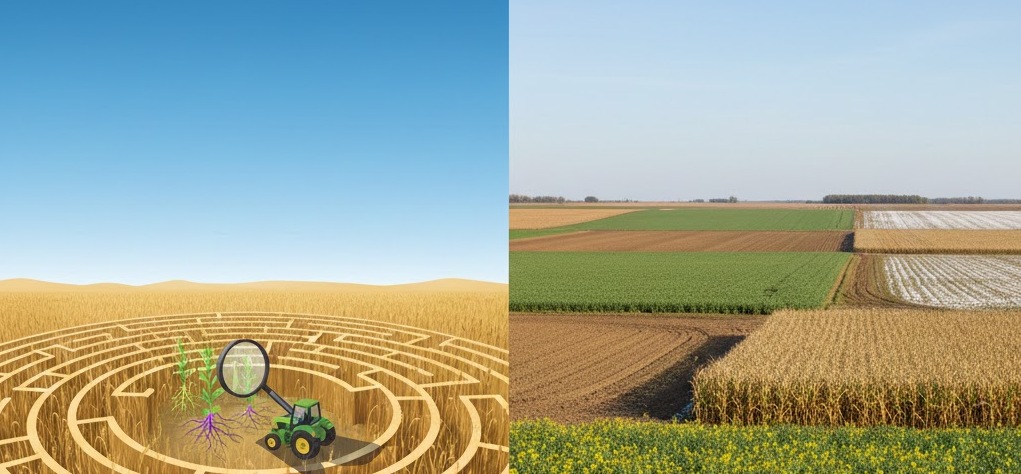
Crop rotations in Canada have become increasingly diverse, reflecting an ever-expanding mix of cereals, pulses, oilseeds, and specialty crops. While this diversity offers economic and agronomic advantages, it also increases the complexity of managing residual herbicides in the soil. Carryover remains one of the most common—and most costly—sources of unintended crop injury, yet it is also one of the most avoidable. Understanding how soil type, moisture, temperature, and product chemistry influence degradation is essential for planning safe re-cropping options. In an era of evolving herbicide Canada regulations and more variable weather patterns, growers need clear strategies to interpret plant-back intervals with confidence.
Residual products play an important role in modern weed management. They create early-season residual weed control that reduces in-season spray pressure, supports resistance management, and protects yield potential. But because these products persist beyond the season in which they are applied, they must be carefully managed. A herbicide that is safe for the crop in year one may be risky for a sensitive crop in year two if the active ingredient has not sufficiently degraded.
How Residual Herbicides Break Down in Soil
Residual herbicide degradation occurs primarily through microbial activity, chemical breakdown, and environmental conditions. While labels provide plant-back intervals based on average conditions, growers know that “average” rarely reflects field reality.
Soil temperature is one of the most powerful drivers of breakdown. Warm soils accelerate microbial activity, leading to faster degradation. Conversely, cooler northern climates, extended cool springs, or early falls limit biological processes and slow the breakdown of many herbicide groups. This is especially relevant in western and northern regions, where shorter frost-free periods can leave active ingredients in the soil longer than expected.
Soil moisture also strongly influences herbicide breakdown. Many actives require adequate moisture for microbial activity or hydrolysis to occur. Dry years restrict these processes, causing herbicides to remain active far longer than label-based assumptions. Recent drought cycles in the Prairies have demonstrated how dramatically dry conditions can extend carryover risk, especially for Group 2 and Group 14 products.
Soil Texture and Organic Matter: Why One Field Is Not Like Another
Soil type significantly affects herbicide persistence. Light sandy soils have less organic matter and lower binding capacity, meaning herbicides remain more biologically available but also more prone to downward movement. Heavy clay soils, by contrast, strongly bind many herbicide molecules, reducing availability for weed control but also slowing microbial access and breakdown.
In Western Canada, clays can hold onto Group 14 and Group 15 herbicides longer than expected, particularly during dry spells. Meanwhile, fields with higher organic matter may buffer some of the risk by binding more product, though this can also prolong its presence. Because soil texture varies even within a single quarter section, accurate mapping and historical knowledge of each field are crucial when evaluating re-cropping safety.
Seasonal Moisture: The Wildcard in Carryover Risk
Moisture patterns between application and re-cropping often dictate whether plant-back intervals hold true. Herbicide degradation depends not only on total precipitation but on timing and distribution. A wet fall followed by a dry spring can slow breakdown. A dry fall and a wet spring may allow degradation to catch up.
Growers should pay special attention to:
- Drought years, which commonly extend plant-back restrictions.
- Cold, wet springs, which delay biological activity.
- Regions with snowmelt-dependent moisture, where herbicide movement and breakdown can vary significantly from field to field.
Because no two seasons are alike, growers should never interpret label plant-back intervals as static values. Instead, they function as guidelines that must be adjusted based on weather and soil conditions experienced since application.
Reading Labels Correctly: Where the Answers Start
Although labels are sometimes viewed as lengthy documents, they remain the most reliable source of plant-back information. However, they must be read carefully. Many labels list multiple plant-back intervals depending on soil type, rainfall accumulation, or pH levels. Some products include conditional re-cropping statements that apply only under very specific conditions.
Key questions growers should ask when interpreting a label include:
- Is the listed plant-back interval based on minimum rainfall?
- Does the product degrade mainly through microbial activity or chemical hydrolysis?
- Are restrictions different for fall versus spring applications?
- Do label tables specify soil zones, pH ranges, or organic matter levels?
Plant-back intervals are minimums—not guarantees. When conditions deviate from those assumed on the label, growers must adjust their expectations and consider extending rotation intervals for sensitive crops.
Calculating Safe Re-Cropping Intervals in Practice
Because every season and field is different, growers need a systematic approach to assess plant-back risk. Start by documenting the rate applied, the date of application, and the environmental conditions from that point onward. Use precipitation records, soil test results, and product label requirements to estimate whether degradation has been adequate.
Low rainfall is the most common red flag. If the herbicide requires a minimum amount of moisture for activation or breakdown, and that threshold wasn’t met, assume the plant-back interval must be extended. When in doubt, consider soil bioassays or field tests, especially before planting high-value crops such as lentils, canola, or peas.
Regional Variation Across Canada
Western provinces tend to experience more herbicide carryover challenges due to drier conditions and heavier soils. In contrast, eastern regions often benefit from higher rainfall and faster microbial activity. However, wet springs can still delay seeding and slow breakdown in heavy soils.
This diversity is why growers cannot rely on general advice; re-cropping decisions should reflect regional climate patterns, soil conditions, and long-term crop plans.
Residual herbicides are essential tools for weed management, but they require careful stewardship to avoid unintended crop injury. By understanding how soil type, moisture patterns, and product chemistry influence herbicide persistence, growers can confidently navigate plant-back intervals across the diverse landscapes of Canadian agriculture.
Reading labels thoroughly, documenting field conditions, and adjusting expectations when seasons deviate from “normal” ensures stronger rotations, healthier crops, and more predictable outcomes year after year.